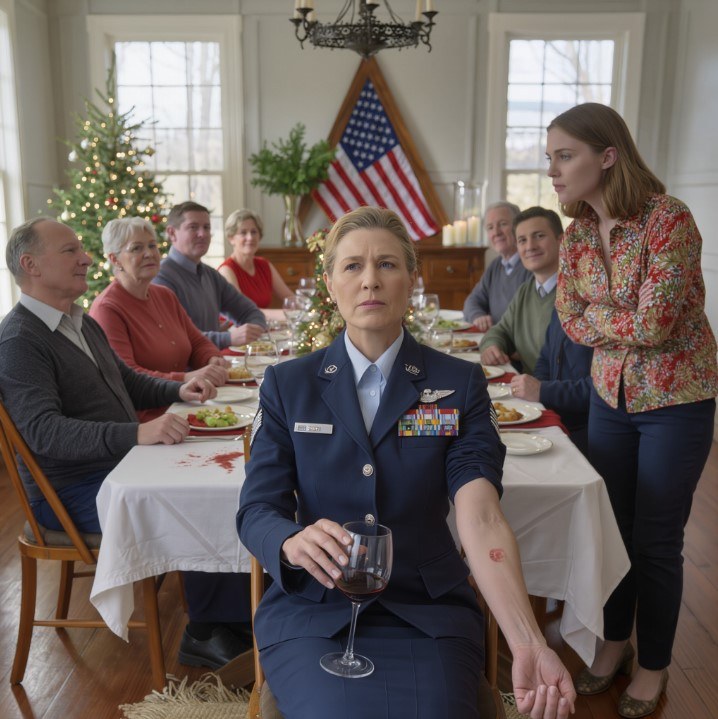
“Maybe—with boundaries, with honesty, and with the understanding that if the old patterns resurface, I’m gone. No drama, no negotiations, just gone.”
She nodded. “That’s fair.”
We didn’t hug. Didn’t have a tearful moment of reconnection. Just reached an understanding about what might be possible if we both continued the work.
Later that night, lying in bed, I thought about forgiveness and what it actually means. I’d spent months thinking I needed to feel warm toward Karen again, needed to genuinely like her and want her in my life. But maybe forgiveness didn’t require any of that. Maybe it just required letting go of the anger, accepting that people are flawed and complicated, and choosing whether or not to engage based on current behavior rather than past hurt.
I’d let go of the anger months ago. What remained was caution, clear boundaries, and a willingness to see if change was real or just performed. That felt honest. That felt sustainable.
My career continued its trajectory. The promotion to O-5 opened doors—opportunities for command positions, specialized training, strategic roles that would shape Air Force operations. I applied for a position overseeing training protocols for combat rescue operations, bringing my Kandahar experience full circle. Colonel Butcher called to tell me I’d been selected.
“You’re going to shape how we prepare officers for these situations for the next decade,” she said. “Your experience matters. Your injury matters. Use it.”
“Yes, ma’am.”
“And Solomon, don’t hide the tremor. Let them see it. Let them know that service costs something, that injuries happen, and that you can still lead effectively. That’s a lesson some of these young officers need.”
She was right. The next generation of combat rescue officers needed to see that wounds didn’t disqualify you, that adaptation was possible, that the injury itself was evidence of having done the work rather than evidence of failure.
I started including my injury in briefings about combat medical operations, not dramatically, just factually, explaining the mechanism of nerve damage, the recovery process, the adaptations required, showing them that I was still here, still leading, still effective. The response from young officers was powerful. Several approached me privately to share their own injuries or health conditions they’d been hiding, afraid it would limit their careers. I counseled them on disclosure, accommodation, and leading despite physical limitations.
One lieutenant told me, “I thought I had to be perfect to be worthy of the uniform. Seeing you lead with an injury that’s visible, it made me realize that’s not what this is about. It’s not about perfection.”
I told her, “It’s about competence, integrity, and commitment. The uniform doesn’t make you invulnerable. It represents your willingness to serve despite vulnerability.”
That became a kind of mission for me. Normalizing the reality that service costs something, that bodies break, that healing is ongoing, and that none of that diminishes the value of the service itself. Karen’s public judgment had tried to weaponize my injury. But through refusing to accept that framing, through treating my tremor as a fact rather than a flaw, I’d found a way to make it meaningful for others struggling with similar challenges.
Two years after the dinner, my family held a birthday celebration for my father’s 70th. The whole family was there—parents, brother, Karen, kids, cousins, aunts, and uncles. I arrived in civilian clothes, my uniform left at home for once. The tremor acted up during dinner, my hand shaking as I cut into birthday cake. I didn’t hide it, didn’t comment on it, just studied my hand and continued.
Emma, Daniel’s daughter, now 12 and thoughtful, said quietly, “Your hand is shaking. Are you okay?”
“I’m fine, sweetheart. Just the nerve damage acting up. Happens sometimes.”
Karen, sitting across the table, met my eyes briefly. Something passed between us. Not friendship exactly, but mutual understanding. She’d learned to see the injury for what it was. I’d learned that her judgment never had the power I’d given it.
Later, my father stood to make a toast. He raised his glass and looked around the table at his assembled family.
“I’m grateful for all of you,” he said. “For the ways you’ve grown and changed and held each other accountable. For the way this family has learned to have hard conversations and come out stronger.”
His eyes found mine.
“And I’m proud of my daughter who serves her country with honor and teaches us all what real strength looks like.”
The table echoed the toast. Karen included.
As people mingled after dinner, I found myself on the back porch with Daniel. We stood in comfortable silence for a while, watching the kids play in the yard.
“Thank you,” he said finally.
“For what?”
“For setting boundaries. For not letting me pretend everything was fine when it wasn’t. For being patient with me while I figured out what was actually happening in my own house.”
“You did the work, Daniel. I just held the line.”
“Still, you could have written me off. Written all of us off. But you stayed connected while maintaining your dignity. That’s harder than people think.”
“I learned it in the military. Clear expectations, firm boundaries, consistent consequences. It works for personnel management. Turns out it works for family, too.”
He laughed. “Everything’s a command structure for you.”
“Not everything, but relationships need structure. Otherwise, people just drift into patterns that hurt them.”
We watched the sun setting, the light golden and warm. My hand tremored slightly in the cooling air. I studied it against the porch railing, not hiding, just supporting.
“Does it hurt?” Daniel asked.
“Not usually. It’s just annoying. Like a reminder that I’m tired or cold or stressed.”
“I’m sorry. I didn’t understand before. When Karen made that comment at the dinner, I should have said something immediately. Should have defended you.”
“You did eventually. That’s what matters.”
“It shouldn’t have taken me so long.”
“No,” I agreed. “But growth is never as fast as we want it to be—for any of us.”
We stood there a while longer, brother and sister rebuilding trust one quiet conversation at a time. Inside, the party continued—laughter, dishes clattering, children’s voices raised in play. Normal family noise no longer weighted with unspoken tension.
That night, driving home, I thought about the journey from that humiliating dinner to this peaceful birthday celebration. The distance wasn’t measured in forgiveness or reconciliation. It was measured in self-respect maintained, boundaries held, and the quiet dignity of refusing to let someone else’s judgment define your worth.
Mijn hand trilde lichtjes aan het stuur. Ik glimlachte. De trilling was geen gebrek. Het was een kaart van waar ik was geweest, wat ik had overleefd, wie ik had gered. Het was bewijs van dienstbaarheid, van opoffering, van een moment waarop ik iemands leven boven mijn eigen comfort had verkozen. Karen had geprobeerd er een teken van zwakte van te maken. Maar zwakte zit niet in de trillende hand. Het zit in de behoefte om anderen te beoordelen om je superieur te voelen. Kracht zit niet in perfecte controle. Het zit in het blijven dienen, leiden, aanwezig zijn, zelfs wanneer je lichaam zichtbare sporen draagt van de prijs die je ervoor betaald hebt.
Jarenlang had ik de trillingen verborgen gehouden, gebagatelliseerd, geprobeerd te voorkomen dat ze me zouden definiëren. Nu begreep ik het. Ze definieerden me niet. Ze beschreven slechts een deel van mijn verhaal. En dat verhaal – gevechtsreddingsofficier, gewond geraakt in dienst, nog steeds leidinggevend, nog steeds groeiend, nog steeds de volgende generatie onderwijzend – was iets waarvoor ik geen bevestiging meer van anderen nodig had. Het respect van mijn collega’s, het vertrouwen van de luchtmachtsoldaten die ik leidde, de liefde van familieleden die de dingen helder hadden leren zien – dat was genoeg. Meer dan genoeg. En als iemand probeerde de littekens die ik had opgelopen te bagatelliseren, nou ja, dat onthulde alleen hun eigen beperkingen, niet die van mij.
Ik reed mijn oprit op, zette de motor af en bleef even in de stille duisternis zitten. Mijn hand rustte op mijn schoot, nog licht trillend van de lange rit. Ik keek ernaar. Deze onvolmaakte, beschadigde, maar veerkrachtige hand die een gewonde piloot uit een ingestort gebouw had getrokken, die talloze levens had gered tijdens medische noodgevallen, die bevelen, rapporten en onderscheidingen had ondertekend. Hij trilde soms, maar bleef desondanks capabel.
Ik dacht na over wat ik zou zeggen tegen een jonge officier die worstelt met zichtbare verwondingen, met de angst dat fysieke schade zijn autoriteit of waarde zou ondermijnen. Ik zou hem vertellen wat ik heb geleerd. Leiderschap gaat niet over onkwetsbaar lijken. Het gaat erom eerlijk te zijn over de prijs die je betaalt, terwijl je trouw blijft aan je doel. Echte kracht erkent beperkingen, maar weigert zich daardoor te laten beperken. En de mensen die ertoe doen, degenen wier respect het waard is, zullen je littekens zien als bewijs dat je iets belangrijks hebt gedaan, niet als bewijs dat je gebroken bent.
Ik stapte uit de auto en pakte snel mijn tas. De nacht was koel en helder, de sterren waren zichtbaar ondanks de basisverlichting. Ergens in de verte steeg een ander vliegtuig op. Jonge piloten die aan hun training begonnen, aan hun eigen diensttijd. Ik zou er morgen zijn, om hen les te geven, hen te begeleiden, hen met mijn voorbeeld te laten zien dat dienen betekent risico’s nemen, dat risico’s soms tot verwondingen leiden, en dat verwondingen de waarde van de dienst zelf nooit verminderen.
Het verhaal dat begon met openbare vernedering en een omgevallen glas wijn, had een heel andere wending genomen. Een bewijs van de kracht van standvastigheid, het belang van waardigheid boven vrede verkiezen, en de stille voldoening te weten dat het oordeel van bekrompen geesten nooit de waarheid over wie je bent kan aantasten.
Ik liep naar binnen, thuiskomend van het feest, vol zelfvertrouwen. Mijn hand trilde misschien. Mijn verleden was misschien ingewikkeld. Mijn familierelaties vereisten misschien zorgvuldige omgang. Maar ik was luitenant-kolonel Linda Solomon, gevechtsveteraan, leider van luchtmachtpersoneel, overlevende van zowel zichtbare als onzichtbare verwondingen. En dat was meer dan genoeg.
Dertig jaar later sta ik voor een spiegel en trek ik voor de laatste keer mijn uniform recht als officier in actieve dienst. Het gezicht dat me aankijkt is 68 jaar oud, getekend door decennia van dienst, commando en de specifieke tekenen van slijtage die horen bij een leven vol betekenis. Mijn haar, nu volledig grijs, zit strak in dezelfde knot die ik al sinds mijn tijd op de academie draag. De trilling in mijn rechterhand is nu sterker, een samensmelting van ouderdom en zenuwschade, maar mijn vingers functioneren nog goed genoeg om de knopen dicht te maken, de insignes op te spelden en de kraag recht te trekken.
Twee sterren prijken op mijn schouders – een rang die in de gezamenlijke strijdkrachten overeenkomt met die van schout-bij-nacht, hoewel ik bij de luchtmacht met pensioen ben gegaan als brigadegeneraal. De promotie vond acht jaar geleden plaats, tegen het einde van mijn carrière, een bekroning van decennia leiderschap die me van medische operaties naar het trainingscommando en strategische planning in het Pentagon brachten.
Vandaag is mijn officiële afscheidsceremonie, en de trilling die me ooit schaamte bezorgde, is nu gewoon onderdeel van wie ik ben. Zichtbaar bewijs van een bepalend moment dat alles wat volgde heeft gevormd.
De ceremonie begint om 14.00 uur. Ik heb twee uur om mijn gedachten te ordenen, mijn toespraak door te nemen en me voor te bereiden op het afscheid van het uniform dat 46 jaar lang mijn identiteit is geweest. Mijn telefoon trilt. Een berichtje van Daniel.
