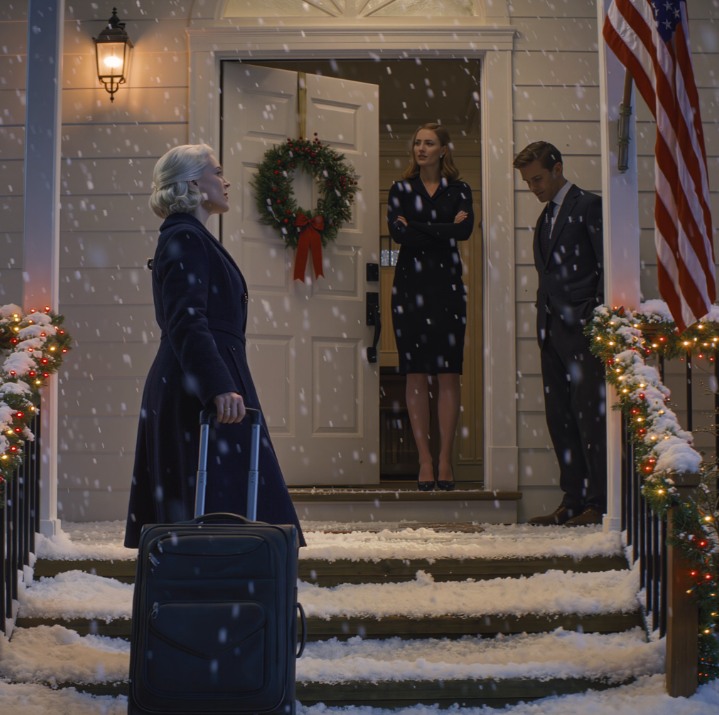
“Zo goed als verwacht. Ik moet een paar aanpassingen in de boekhouding doen.”
Margaret knikte, waarschijnlijk in de veronderstelling dat ik Richards naam aan de nabestaandenuitkering moest toevoegen of de begunstigdengegevens moest bijwerken. In plaats daarvan gaf ik haar Harolds documenten. Haar ogen werden groot toen ze ze las.
“Mevrouw Morrison, deze bedragen… Ik had geen idee dat u over zulke aanzienlijke vermogens beschikte.”
“Privacy was belangrijk voor mijn man en mij. Maar de omstandigheden zijn veranderd.”
“Dat begrijp ik. Wanneer wilt u dat deze overboekingen ingaan?”
« Onmiddellijk. »
Terwijl Margaret het papierwerk verwerkte, dacht ik aan Cynthia thuis, waarschijnlijk bezig met mijn kledingkast om te beslissen welke kleren ik wilde bewaren. Ik dacht aan Marcus en Sarah, die waarschijnlijk met financieel adviseurs spraken over de nalatenschap van hun vader. Ik dacht aan David, die zwakke David, die zich door zijn vrouw had laten intimideren, de vrouw die hem had opgevoed.
Ze dachten dat ze van me af waren. Ze dachten dat de lastige weduwe uit de weg was, waardoor ze vrij spel hadden om hun erfenis op te eisen. Ze hadden geen idee dat ze net ruzie hadden gezocht met iemand die 38 jaar lang had geleerd hoe je een strategisch spel speelt.
Mijn telefoon ging af terwijl ik de laatste overdrachtsdocumenten ondertekende. Cynthia’s naam verscheen op het scherm. Ik liet het gesprek naar de voicemail gaan en luisterde vervolgens met steeds grotere amusement naar haar bericht.
“Alberta, we hebben wat verwarrende documenten gevonden op Richards kantoor. Juridische documenten die niet te begrijpen zijn. Zou je me terug kunnen bellen? Er zijn misschien een paar dingen die je moet uitleggen.”
Confusing paperwork. I could only imagine what they’d found. Probably the outdated copies Richard kept for show—documents that referenced assets that no longer existed under his name. They were getting nervous, realizing that their father’s financial picture wasn’t as clear-cut as they’d assumed.
I deleted the message without responding. Let them wonder. Let them worry. Let them spend sleepless nights trying to figure out why nothing added up the way they’d expected. Tomorrow, I would start phase two of my plan. Tonight, I would have dinner in my anonymous hotel room and watch the news like any other senior citizen spending the evening alone.
But I wasn’t alone. Not really. I had Harold. I had Margaret. I had a network of professionals who’d been quietly managing my affairs for years. And most importantly, I had time.
Cynthia and her allies thought they’d won a quick victory. They had no idea they’d just declared war on someone who’d been preparing for this battle longer than they’d been part of this family. The grieving widow was done grieving. Now it was time for the real Alberta Morrison to emerge from the shadows. And when she did, the family that had dismissed her so easily would learn that some assumptions cost more than others.
Three days had passed since I’d moved into the Hampton Inn, and I could tell the family was getting restless. My phone had been buzzing with increasingly urgent messages from Cynthia, each one more demanding than the last. She wanted me to come back and explain some discrepancies they’d found in Richard’s paperwork. She needed me to sign documents. She had questions only I could answer. I ignored them all.
Instead, I spent my mornings in the hotel’s business center, making calls that would have shocked them senseless. Tuesday, I spoke with the property management company that handled my three apartment complexes in Manhattan. Wednesday, I had a conference call with my investment adviser about moving some assets around. Thursday, I spent two hours on the phone with architects about renovation plans for the building I owned in Soho—the building.
My little secret that even Richard hadn’t fully understood the value of when I’d bought it 15 years ago with money from my first marriage. Back then, it had been a run-down warehouse in a neighborhood nobody wanted. Now, it was worth $28 million, and the rent from the high-end lofts I’d created generated more income in a month than Richard’s consulting firm had made in a year.
But they didn’t know any of that. To them, I was still just the second wife who’d never worked a day in her life.
On Friday morning, Harold called with news that made me smile for the first time since Richard’s funeral.
“They’ve hired an attorney,” he said without preamble.
“Have they now?”
“Jackson Morrison from Morrison and Associates. No relation to you, I assume, despite the name.”
“Never heard of him. What does he want?”
“He’s asking questions about Richard’s estate. Apparently, the family has some concerns about asset distribution and wants to ensure everything is being handled properly.”
I set down my coffee cup, feeling that familiar cold satisfaction spread through my chest.
“How proper of them to be concerned.”
“There’s more. They’re requesting a formal reading of the will. They want all beneficiaries present, including you.”
“When?”
“Monday afternoon, 2:00, at their attorney’s office.”
“Perfect. I’ll be there.”
“Alberta, are you sure you’re ready for this? Once we walk into that room, there’s no going back. They’re going to learn exactly who you are.”
I looked out my hotel window at the ordinary world beyond, at people going about their ordinary lives with ordinary problems. Soon, very soon, I would no longer be invisible to the family that had dismissed me so easily.
“Harold, I’ve been ready for 15 years.”
That weekend, I went shopping. Not at the discount stores they probably expected a newly poor widow to frequent, but at the boutiques I’d always preferred. I chose a navy blue suit, elegant but understated, along with my grandmother’s pearl necklace and the Cardier watch Richard had given me for our 10th anniversary. I wanted to look exactly like what I was—a woman of substance who had simply chosen to be underestimated.
Sunday evening, I moved out of the Hampton Inn and into the penthouse suite at the Fairmont Hotel downtown, just for one night, just to remind myself who I really was before walking into that meeting. I ordered room service—lobster and champagne—and reviewed the documents Harold had prepared. Everything was in order. Everything was legal. Everything was about to change.
Monday morning arrived gray and drizzly, the kind of weather that matched my mood perfectly. I dressed carefully, applied my makeup with precision, and arrived at Morrison and Associates 15 minutes early. The receptionist, a young woman who couldn’t have been more than 25, looked me over with barely concealed dismissal.
“You’re here for the Holloway estate reading?” she asked, checking her computer screen.
“I am. And you are?”
“Alberta Morrison. The widow.”
Something in my tone made her look up sharply, but before she could respond, voices erupted from down the hall. Loud, angry voices that I recognized immediately.
“This is ridiculous,” Cynthia was saying. “Why does she even need to be here? She’s not a real beneficiary.”
“The law requires all named parties to be present,” came an unfamiliar male voice—their attorney, presumably.
“But she didn’t contribute anything to the estate,” Marcus added. “Dad supported her, not the other way around.”
“Nevertheless, she has legal standing as the surviving spouse.”
I listened to them argue about me like I was an inconvenience, a legal technicality to be managed. The receptionist kept glancing at me nervously, probably wondering if I was going to break down or cause a scene. Instead, I sat quietly in the leather chair, hands folded, looking exactly like the kind of little old lady they expected me to be.
At exactly 2:00, Harold arrived. He nodded to me with professional courtesy, giving no indication that we’d spent hours planning this moment. Behind him came a woman I didn’t recognize—tall, sharp, with the kind of presence that commanded attention.
“Mrs. Morrison,” Harold said formally. “I’d like you to meet Catherine Walsh. She’ll be representing your interest today.”
Catherine extended her hand with a smile that didn’t reach her eyes. “Mrs. Morrison, I’ve heard a great deal about your situation.”
Before I could respond, Jackson Morrison himself appeared. A soft-looking man in his 50s who seemed overwhelmed by the circumstances he’d been hired to manage.
“Well,” he said, mopping his forehead with a handkerchief. “I believe everyone is here now. Shall we proceed?”
The conference room was larger than it needed to be, with a polished table that could have seated 20 people. The family had arranged themselves on one side like they were preparing for battle. Cynthia sat at the head, flanked by David and Sarah, with Marcus positioned slightly behind them like backup. They dressed for success—expensive suits, confident postures, the look of people who expected to inherit everything.
I took the seat directly across from them, with Harold and Catherine on either side of me. The symbolism wasn’t lost on anyone in the room.
Jackson Morrison cleared his throat and began reading Richard’s will in a monotone voice that suggested he’d done this hundreds of times before. The standard language about being of sound mind, the formal declarations, the preliminary bequests to charity. Then came the part they’d been waiting for.
“To my beloved children, Marcus, Sarah, and David, I leave the sum of $50,000 each, to be distributed equally among them.”
I watched their faces carefully. $50,000 each was generous for most families, but it was far less than they’d expected. Cynthia’s mouth tightened almost imperceptibly. Sarah frowned. Marcus leaned forward like he’d misheard.
“And to my dear wife, Alberta Morrison Holloway, I leave the remainder of my estate, including all properties, investments, and business interests, to be hers absolutely and without restriction.”
The silence that followed was deafening. Jackson Morrison continued reading, but I could see that no one was listening anymore. They were all staring at me with expressions ranging from shock to outrage to disbelief.
“Excuse me,” Cynthia interrupted, her voice sharp enough to cut glass. “Could you repeat that last part?”
Jackson Morrison looked uncomfortable. “The bulk of Mr. Holloway’s estate goes to his widow, as is customary in such circumstances.”
“But what exactly does that include?” Sarah asked, her voice rising. “The house, his business? What are we talking about here?”
It was Catherine Walsh who answered, consulting her own copy of the will with professional detachment.
“According to these documents, Mrs. Morrison inherits all real property, all financial accounts, all business assets, and all personal property not specifically mentioned elsewhere in the will.”
“That’s impossible,” Marcus said flatly. “Dad would never leave us with just 50,000 each.”
Harold leaned forward slightly. “I’m afraid it’s quite legal, Mr. Holloway. Your father was very specific about his intentions.”
“But she didn’t earn any of it,” Cynthia exploded, finally losing the composure she’d been struggling to maintain. “She never worked. She never contributed anything. She was just there, living off his success.”
The words hung in the air like poison. Just there. The same phrase she’d used the night she’d thrown me out of my own home. The same dismissal, the same contempt, the same fundamental misunderstanding of who I really was.
I stood up slowly, feeling every eye in the room focus on me. For 38 years, I had let Richard be the face of our success. I had allowed people to assume he was the business mind while I played the supporting wife. I had been content to remain in the shadows, building my empire quietly while he took the credit publicly. But Richard was gone now, and the shadows had served their purpose.
“You’re absolutely right, Cynthia,” I said quietly. “I never contributed anything to Richard’s success.”
She blinked, clearly not expecting agreement.
“Richard’s consulting firm, his modest investments, his reputation in the community—that was all him. I had nothing to do with any of it.”
I could see confusion rippling across their faces. This wasn’t the response they’d expected.
“But you see,” I continued, my voice growing stronger, “Richard’s estate isn’t what you think it is. And I’m not who you think I am.”
Catherine Walsh was already reaching into her briefcase, pulling out documents that would change everything. Harold was checking his watch, timing the moment perfectly.
“What do you mean?” David asked, speaking for the first time since the reading began.
I looked at each of them in turn—these people who had dismissed me, who had thrown me out of my own home, who had treated me like a burden to be disposed of.
“I mean,” I said, allowing myself the smallest smile, “that you’ve been operating under some very expensive assumptions about who owns what in this family.”
The real game was about to begin.
Catherine Walsh opened her briefcase with the precision of a surgeon preparing for a delicate operation. The documents she withdrew were organized in neat folders, each one labeled with the kind of detail that suggested this moment had been planned for a very long time.
“Perhaps,” Catherine said in her crisp, professional voice, “we should clarify exactly what constitutes Richard Holloway’s estate.”
Jackson Morrison shifted uncomfortably in his chair. “I’m not sure I understand the question.”
“The question,” Harold interjected, “is whether Richard actually owned the assets that his family believes they’re inheriting.”
I watched Cynthia’s face carefully. The confident smirk she’d worn since entering the room was beginning to crack around the edges.
“Of course he owned them,” she said. But there was a new uncertainty in her voice. “The house, the business, everything. Alberta never worked, never contributed financially.”
“That’s where you’re wrong,” Catherine interrupted, sliding the first document across the polished table. “Mrs. Morrison has been the primary owner of virtually every significant asset in this family for over 15 years.”
The paper landed in front of Cynthia with a soft whisper that seemed to echo in the suddenly silent room. She stared at it like it might bite her.
“This is the deed to the property at 47 Elm Street,” Catherine continued. “The house you’ve been living in since Mrs. Morrison graciously vacated it. Notice the name on the title.”
Cynthia picked up the document with trembling fingers. Her face went white as she read.
“Alberta Morrison,” she whispered.
“That’s correct. The house was transferred to Mrs. Morrison’s sole ownership in 2008, five years after their marriage. Mr. Holloway retained lifetime occupancy rights, but ownership transferred completely upon his death.”
Sarah grabbed the paper from Cynthia’s hands, scanning it frantically. “This has to be a mistake. Dad bought that house before he even met her.”
