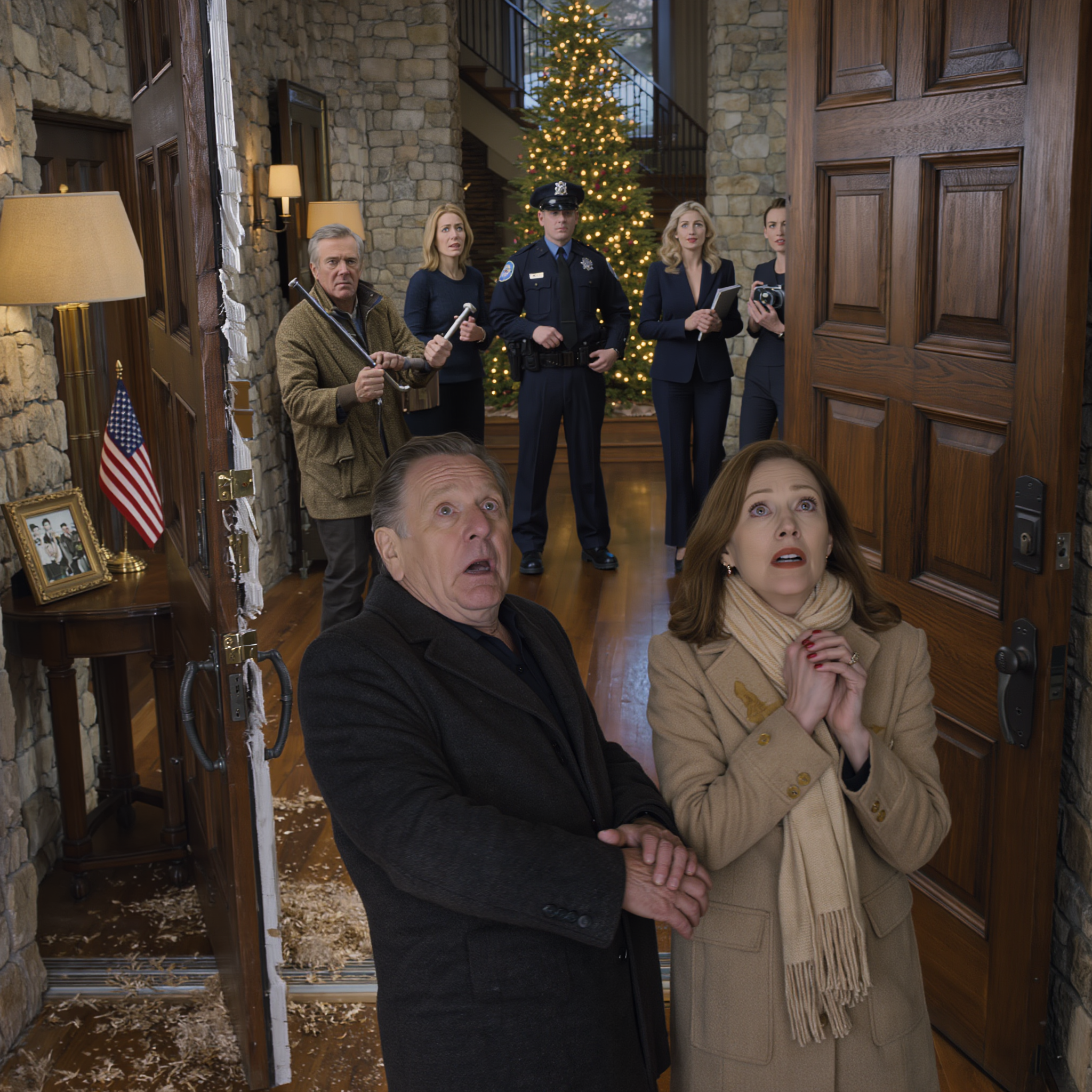
My family is trying to play the “concerned relatives” card, but they have forgotten where they are standing.
They are standing in a historic preservation district, a place where painting your front door the wrong shade of red can result in a fine of five hundred dollars a day.
Grant Halloway and I spend the afternoon drafting a document that is less of a complaint and more of a strategic nuclear strike.
We are not filing for a restraining order. Not yet.
We are filing an emergency zoning violation report with the Glenn Haven Preservation Council.
The manor at 440 Blackwood Lane is not just a house. It is a class A protected structure. The deed comes with a rider that is forty pages long, detailing everything from the allowable decibel level of garden equipment to the specific type of mortar required for brick repairs.
It is a bureaucratic nightmare for a homeowner, but for a woman trying to repel an invasion, it is a fortress.
At two o’clock, the preservation council holds its emergency session via Zoom. I have requested the slot under the “imminent threat to structural integrity” clause.
I sit in my library, the new camera hidden in the vent above me recording silently, and log into the meeting.
The council consists of five people who look exactly as I expect: silver hair, stern glasses, and an air of perpetual judgment. They are the gatekeepers of Glenn Haven’s past.
“Miss Lopez,” the chairwoman, a woman named Mrs. Higgins, begins. “We received your urgent filing regarding unauthorized industrial modification. Please explain.”
I share my screen.
I do not show them the video of my father yelling. I show them the photos of the server racks.
“These are high-density cryptographic mining units,” I explain, my voice professional and detached. “As you can see, my estranged relatives, Mr. Graham Caldwell and Mr. Derek Caldwell, attempted to install twenty of these units in the basement yesterday. Each unit generates approximately seventy decibels of noise and produces significant waste heat. They also attempted to bypass the residential breaker box to draw industrial-grade amperage.”
I pause to let the words “industrial grade” sink in. In a residential preservation zone, that phrase is profanity.
Mrs. Higgins leans closer to her webcam, her eyes narrowing.
“They intended to run a server farm in the Blackwood Manor?”
“Yes, Mrs. Higgins,” I say. “They also attempted to drill through the original 1920 wrought iron gate because they claimed to have lost the key.”
I hear a collective gasp from the five squares on my screen. To these people, drilling a historic gate is a crime worse than assault.
“Are the perpetrators present on the call to defend these actions?” a board member asks.
“No,” I say. “They believe they have a right to the property via a lease I contend is forged. However, even if the lease were valid, the zoning laws supersede any private rental agreement.”
I had sent the meeting link to Graham’s email address an hour ago. He hasn’t joined. He likely saw it and dismissed it as some boring administrative nonsense, assuming that because he is a wealthy white man in a suit, he doesn’t need to answer to a local committee.
That arrogance is his undoing.
“Miss Lopez,” Mrs. Higgins says, adjusting her glasses. “The council takes a very dim view of commercial industrialization in the historic district. The heat generation alone could damage the limestone foundation. The noise pollution would violate the neighborhood covenant.”
The council votes unanimously in four minutes.
They issue an immediate cease-and-desist order against Graham and Derek Caldwell.
The order prohibits the installation, operation or storage of any industrial computing equipment on the premises. It also prohibits any unauthorized modification to the electrical grid or the physical structure of the gate.
But the kicker is the fine structure.
“Any violation of this order,” Mrs. Higgins reads into the record, “will result in a penalty of one thousand dollars per day, per violation, retroactive to the first reported incident. Furthermore, the council authorizes the immediate involvement of local law enforcement to prevent damage to a protected heritage site.”
It is perfect.
It isn’t a family dispute anymore.
Now, if Derek plugs in a single server, he isn’t just annoying his sister. He is attacking the town’s heritage.
“Thank you, Council,” I say, and end the call.
I immediately forward the digital order to three recipients.
First, the local police department dispatch. I add a note:
Please attach to the file for 440 Blackwood Lane. Any attempt by the Caldwells to access the property with this equipment is now a violation of municipal zoning law.
Second, the regional electric company.
Attached is a court-ordered prohibition on transferring service to Derek Caldwell. Any authorization of service transfer will be considered aiding in the violation of a preservation order.
Third, to Grant Halloway.
We have the leverage, I write. It’s official.
Now Derek is trapped.
He can’t move the rigs in without bankrupting himself with fines. He can’t modify the power. He can’t even drill a lock without the town coming down on him.
I have taken away his tools.
The house is quiet, but my phone is not.
At 4:30, it rings.
It is Marilyn.
I stare at the screen. The name “Mom” flashes in white letters against a black background. It feels alien. I haven’t called her “Mom” in my head for years. She is Marilyn. She is the woman who watched me drown and critiqued my swimming stroke.
I let it ring. It stops, then rings again immediately.
She is persistent.
She probably realizes that the public shaming hasn’t worked. Or perhaps Derek has just received the email notification about the cease-and-desist order and is currently screaming at her.
I let it go to voicemail.
Then a text message appears.
Clare, pick up. We need to talk privately, without the lawyers. Just family.
I laugh out loud. It is a harsh, dry sound in the empty library.
“Just family.”
That is their favorite trap.
“Just family” means no witnesses.
“Just family” means they can guilt, manipulate and lie without anyone holding them accountable.
They wanted me to step out of the legal arena.
They wanted me to step out of the legal arena I had built and come back into the emotional mud pit where they were the masters. I didn’t reply.
Instead, I opened my laptop again. I had one more piece of the puzzle to place before the sun went down.
Grant had mentioned a reporter, Andrea Mott. She wrote for the Glenn Haven Gazette, a small paper that usually covered bake sales and high school football. But Andrea had a reputation. She had broken a story two years ago about a developer trying to bribe the zoning board. She liked to fight.
I found her email address.
I composed a new message. The subject line was simple:
The truth about the Blackwood Manor incident.
I attached the folder. I attached the video of the locksmith. I attached the photo of the forged lease. I attached the screenshot of Marilyn’s Facebook post calling me mentally unstable. I attached the new cease-and-desist order from the council. And finally, I attached the screenshot of Derek’s loan fraud judgment.
I wrote a short body for the email:
